
Why Are There Flowers Everywhere in Bali? The Beautiful Meaning Behind the Island’s Daily Offerings
Balinese flowers and rituals by Arjun Adinata
Table of content:
- Why Are Flowers Everywhere in Bali?
- Understanding Canang Sari: A Small Offering with a Big Meaning
- The Symbolism Behind the Colors of Balinese Flowers
- Everyday Rituals Every Visitor Will Notice
- If You’re Lucky Enough to Witness a Traditional Ceremony
- Respecting Balinese Rituals as a Visitor
- Final Thoughts
One of the very first things you’ll notice after arriving in Bali isn’t the beaches or the famous rice terraces. Instead, it’s the small palm-leaf baskets filled with colorful flowers and burning incense that seem to appear everywhere. You’ll find them outside hotels, restaurants, local shops, temples, sidewalks, and even in parking areas.
The first time I visited Bali, I assumed these little offerings were simply decorative or reserved for special ceremonies. After spending several days exploring the island, talking with local residents, and observing their daily routines, I realized they were something far more meaningful. Every flower, every leaf, and every stick of incense carries a purpose that reflects centuries of Balinese Hindu philosophy.
From that moment on, my journey through Bali changed. I was no longer just admiring beautiful landscapes—I was discovering a culture where spirituality is woven into everyday life.
Why Are Flowers Everywhere in Bali?
For the Balinese people, flowers are much more than beautiful plants. They represent gratitude, respect, purity, and devotion to God.
Every morning before beginning their daily activities, many Balinese families prepare small offerings known as canang sari. During my stay at a family-run guesthouse in Ubud, I woke up early one morning and watched the owner carefully arrange several offerings before sunrise. She quietly lit incense, whispered a short prayer, and placed the offerings at the entrance, kitchen, garden, and parking area.
Read also :

There was no sense of rushing. Everything was done with calmness and sincerity, as if expressing gratitude was simply the most natural way to begin the day.
Moments like this reminded me that Balinese traditions are not performances created for tourists. They are authentic parts of everyday life that continue to shape the island’s unique identity.
Understanding Canang Sari: A Small Offering with a Big Meaning
Among all the religious offerings in Bali, canang sari is the one visitors encounter most often. Although small in size, it carries profound symbolism.
A canang sari is usually made from woven young coconut leaves. Inside are colorful flowers, leaves, small pieces of fruit or snacks, and a burning incense stick placed during prayer.
Each element has its own meaning. The woven palm leaves symbolize sincerity, the flowers represent beauty and gratitude, while the rising incense smoke is believed to carry prayers toward the divine.
What surprised me most was how many places these offerings appeared. They weren’t limited to temples. I found them outside homes, shops, cafés, offices, motorcycles, cars, and even beside rice fields. It reflects the Balinese belief that every aspect of life deserves gratitude and blessings.
As a visitor, one simple gesture of respect is to avoid stepping on a canang sari whenever possible. Since many offerings are placed on sidewalks or near entrances, paying attention to where you walk shows appreciation for local customs.
The Symbolism Behind the Colors of Balinese Flowers
One detail that fascinated me most was the careful selection of flower colors. At first glance, they simply make the offering look beautiful. In reality, every color represents a deeper spiritual meaning.
White flowers symbolize purity and are commonly associated with the east. Red flowers represent strength and courage. Yellow flowers symbolize prosperity, wisdom, and blessings, while blue or green flowers represent harmony and balance with nature.
The flowers are also carefully arranged according to specific directions that reflect the Balinese Hindu understanding of the universe and the balance between natural and spiritual forces.
Once I understood this symbolism, I began seeing every canang sari as a small piece of living art rather than just a simple floral arrangement.
Everyday Rituals Every Visitor Will Notice
You don’t need to visit Bali during a major religious festival to experience its spiritual traditions. In fact, the everyday rituals are often the most memorable.
Early in the morning, you may see shop owners placing fresh offerings before opening their businesses. Hotel staff quietly prepare canang sari at the entrance. Restaurants often place offerings near the kitchen, while many drivers make small offerings inside their vehicles before starting their day.
On several occasions, I also witnessed a temple priest sprinkling holy water over worshippers after prayers. These ceremonies were simple, peaceful, and deeply meaningful.
For the Balinese people, these daily rituals are not obligations but expressions of gratitude that help maintain harmony between humans, nature, ancestors, and God.
If You’re Lucky Enough to Witness a Traditional Ceremony
One of the highlights of my trip was unexpectedly witnessing a traditional ceremony in a village near Gianyar.
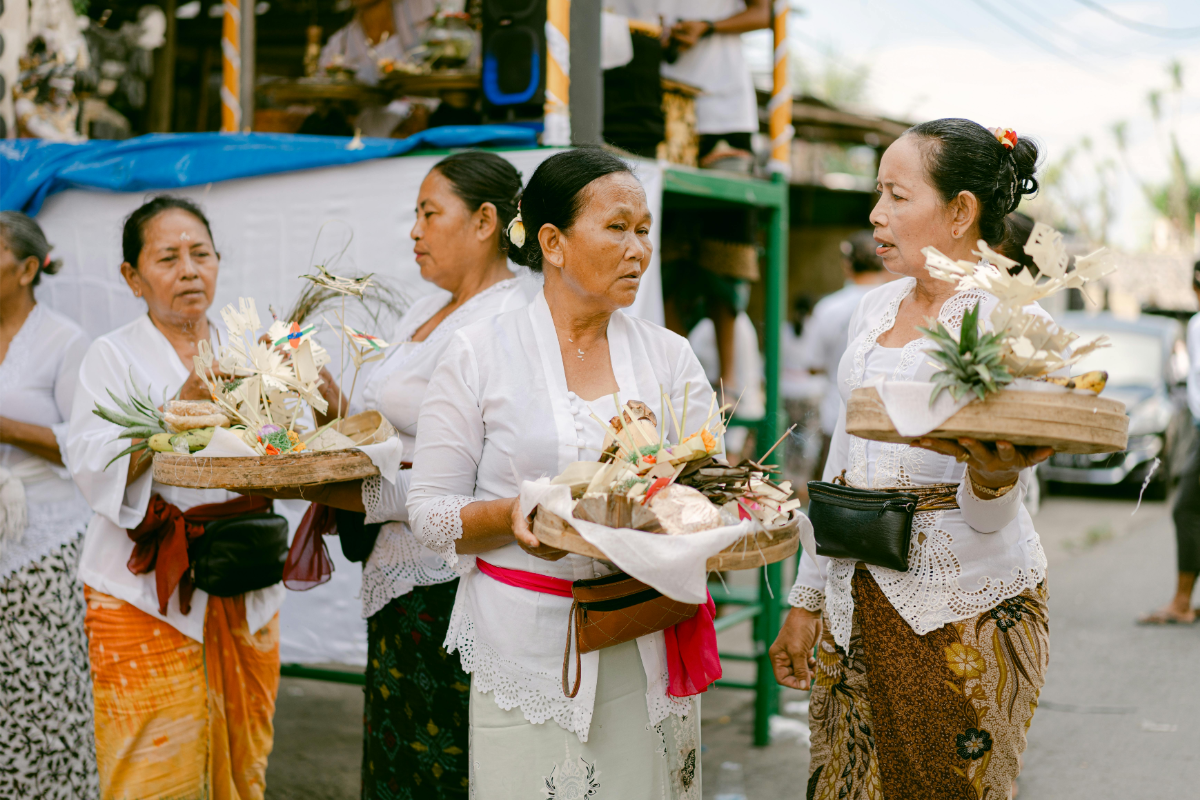
From early morning, villagers dressed in elegant white ceremonial clothing with colorful sashes. Women gracefully carried gebogan—beautiful towers of fruit and flowers balanced on their heads. Traditional gamelan music echoed through the village while the fragrance of incense drifted through the air.
Flowers appeared everywhere throughout the ceremony. They decorated offerings, temples, and ceremonial objects, serving not only as beautiful ornaments but also as symbols of respect for God, ancestors, and the natural world.
What impressed me most wasn’t the grandeur of the ceremony itself. It was the sense of community. Young and old worked together to prepare every detail, showing that these traditions continue to unite Balinese families across generations.
Respecting Balinese Rituals as a Visitor
Watching a Balinese religious ceremony is a privilege, and showing respect is incredibly important.
Dress modestly, especially when visiting temples or sacred places. Always ask permission before taking photographs of people who are praying. Avoid standing in the middle of processions or blocking ceremonial routes.
Never touch religious offerings, ceremonial objects, or flowers prepared for rituals. Most importantly, remain quiet and respectful throughout the ceremony.
These simple acts of courtesy are deeply appreciated by local communities and often lead to warm conversations and genuine cultural exchanges.
Final Thoughts
The longer I stayed in Bali, the more I realized that its greatest beauty isn’t found only in its beaches, waterfalls, or rice terraces. It lies within the island’s living traditions and the spirituality that shapes everyday life.
The tiny flowers inside a canang sari remind us that gratitude doesn’t have to be grand. Small, sincere acts performed every day can hold extraordinary meaning.
So, the next time you visit Bali, slow down for a moment. Notice the small offering placed outside a family home, breathe in the scent of burning incense drifting through the morning air, and observe the quiet rituals taking place around you.
You may discover that Bali’s true magic isn’t just something you see—it’s something you feel.

I am a tourism enthusiast passionate about discovering Indonesia’s destinations, culture, and local communities. I believe tourism and UMKM can grow together, creating meaningful experiences for travelers while supporting local businesses and communities.
Related Post
Subscribe
Login
0 Comments
Oldest