
Visiting Borobudur Temple? Here’s What Nobody Tells You Before You Go
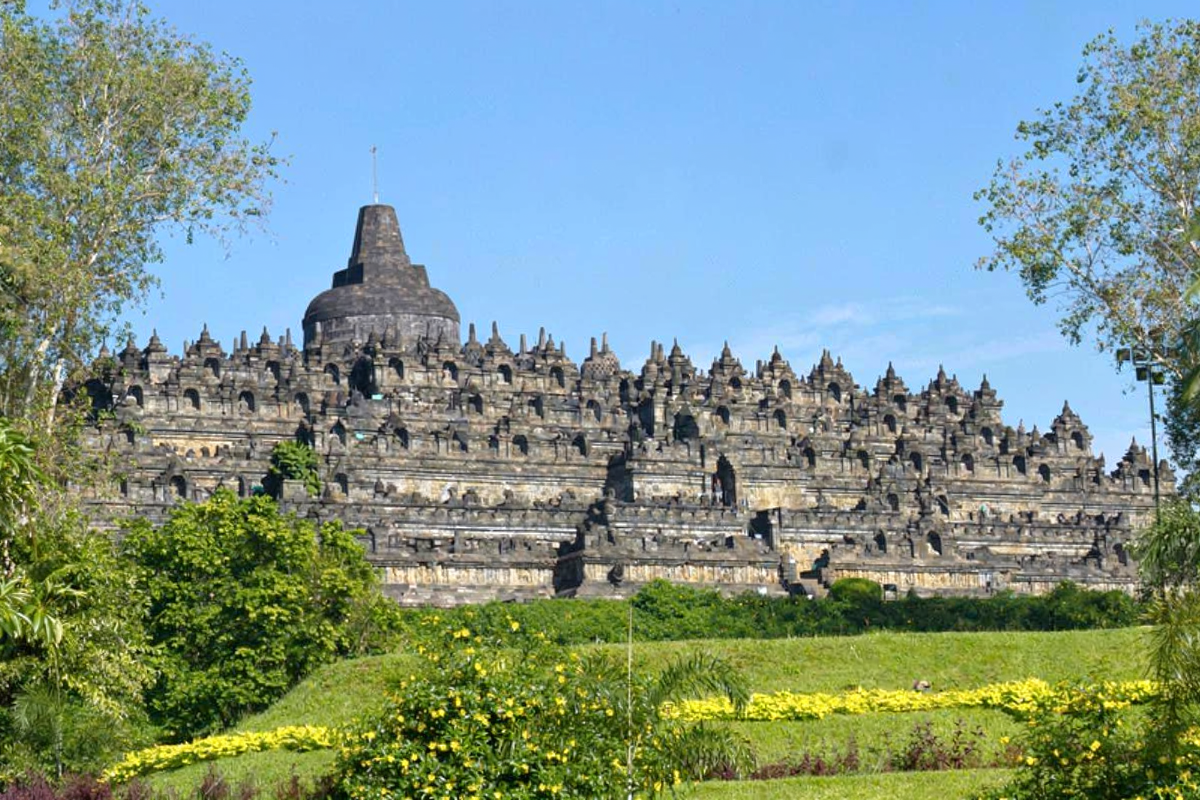
Borobudur Temple by phonprom
Table of content:
- Where Is Borobudur Temple?
- Why Is Borobudur So Special?
- The Journey from Yogyakarta to Borobudur
- Borobudur Has Changed a Lot
- Borobudur Entrance Ticket Price
- Taking the Electric Shuttle to Borobudur
- Why Do You Have to Change Your Shoes?
- Your Borobudur Tour Starts with a Guide
- Walking Toward the Temple
- The History of Borobudur
- Borobudur’s Legends and Myths
- Be Careful on the Borobudur Stairs
- The First Terrace: Time for Photos
- Higher Terraces, Better Views
- Can You Climb to the Main Stupa?
- Going Down Is Harder Than Going Up
- The Best Time to Visit Borobudur
- Is Visiting Borobudur Worth the Money?
If you are planning a trip to Yogyakarta, there is one destination that deserves a place at the top of your itinerary: Borobudur Temple.
But before we go any further, let’s clear up one common misconception.
Borobudur Temple is not actually in Yogyakarta.
The temple is located in Magelang Regency, Central Java, approximately 40 kilometers from Tugu Yogyakarta. Because it is relatively close to Yogyakarta and is commonly visited as a day trip from the city, many people assume that Borobudur is part of Yogyakarta.
It isn’t.
Read also :
And once you make the journey from Yogyakarta to Magelang, you will quickly understand why this ancient monument is worth the trip.
Borobudur is not just another tourist attraction. It is the world’s largest Buddhist temple, an extraordinary masterpiece of ancient architecture, and a UNESCO World Heritage Site.
So, what is it actually like to visit Borobudur today?
Let me take you through the experience.
Where Is Borobudur Temple?
Borobudur Temple is located in Borobudur District, Magelang Regency, Central Java, Indonesia.
From Tugu Yogyakarta, the journey is roughly 40 kilometers and usually takes around one to one and a half hours, depending on traffic.
This relatively short distance makes Yogyakarta an excellent base for visiting Borobudur.
You can easily leave Yogyakarta in the morning, spend several hours exploring the temple and surrounding area, and return to the city later in the day.
Along the way, the urban landscape gradually gives way to villages, rice fields, green hills, and traditional Javanese scenery.
And if the weather is clear, the landscape around Borobudur can be spectacular.
Why Is Borobudur So Special?
Imagine discovering a gigantic stone monument built more than a thousand years ago, without modern construction equipment, cement, or machinery.
That is Borobudur.
The temple was constructed around the 8th and 9th centuries, during the period of the Sailendra Dynasty.
It is made primarily from volcanic andesite stone and consists of several levels arranged according to Buddhist cosmology.
From above, the overall structure resembles a giant mandala.
The monument contains 504 Buddha statues, 72 perforated stupas, and thousands of relief panels depicting Buddhist teachings, stories, human life, and the society of ancient Java.
Walking around Borobudur is therefore more than simply looking at an impressive building.
You are essentially walking through a giant stone book telling stories from more than a thousand years ago.
The Journey from Yogyakarta to Borobudur
For most international visitors, the journey begins in Yogyakarta.
If you are staying somewhere around Malioboro or near Tugu Yogyakarta, getting to Borobudur is relatively straightforward.
I recommend leaving early.
Why?
Because the weather around Borobudur can become extremely hot later in the day.
An early departure also gives you more time to enjoy the journey without feeling rushed.
As you leave Yogyakarta, you will gradually see a different side of Java.
Rice fields stretch along the roadside, villages appear between the trees, and the mountains begin to dominate the horizon.
Eventually, you will arrive in the Borobudur area.
And that’s when the real adventure begins.
Borobudur Has Changed a Lot
If you visited Borobudur many years ago, you may be surprised by how much the tourist area has developed.
The parking area is now very large and much more organized.
There are also better visitor facilities, pedestrian areas, shuttle transportation, information points, and extensive souvenir areas.
One thing you will definitely notice is the number of souvenir sellers.
You will pass through rows of shops selling everything from miniature Borobudur temples and T-shirts to handicrafts, bags, batik, local food, coffee, and other Indonesian souvenirs.
And here is one tip I learned from the experience:
Buy Your Souvenirs Before Climbing the Temple
Yes, before.
You might think it makes more sense to buy souvenirs on the way out.
Actually, I would recommend doing the opposite.
Climbing Borobudur involves walking and going up and down steep stairs. By the time you finish the tour, your legs may be begging for a holiday of their own.
Shopping while you are still fresh is much more enjoyable.
You can take your time, compare products, and negotiate prices without feeling exhausted.
And if you enjoy bargaining, this is definitely the better moment to do it.
Borobudur Entrance Ticket Price
At the time of writing, the ticket price for climbing the Borobudur temple structure is approximately:
- Children under 12: IDR 120,000
- Adults: IDR 150,000
Ticket prices and visitor policies can change, so always check the official Borobudur information before your trip.
The experience is more structured than simply buying a ticket and walking straight into the temple.
First, you receive a queue number.
Then you wait until your number is called by the ticketing staff.
For payment, using QRIS is a convenient option if you have access to it.
After completing the payment, you receive your ticket and a special wristband containing a barcode.
Keep this wristband safe.
You will use it at several points during your visit.
Taking the Electric Shuttle to Borobudur
After entering the visitor area, you might expect the temple to be just a short walk away.
Not quite.
The distance from the main entrance area to the temple courtyard is roughly two kilometers.
Fortunately, visitors are transported by an electric shuttle train.
The ride is comfortable and saves you from using up your energy before the actual climb.
And believe me, you will want to save that energy.
Why Do You Have to Change Your Shoes?
When you reach the temple courtyard, visitors who are going to climb the temple structure are required to change their footwear.
Simply scan the barcode on your wristband and staff will provide you with a special pair of sandals.
The sandals are included in the ticket price and can be taken home afterward as a souvenir.
The sandals are made from natural, environmentally friendly materials, reportedly including processed water hyacinth fiber.
According to the staff, changing footwear helps protect the ancient stone surfaces of Borobudur from excessive wear.
From a conservation perspective, the idea makes sense.
But there is another interesting side to the program.
The sandals also provide opportunities for local communities and small businesses to participate in the tourism economy.
So, in my opinion, it is a clever combination of conservation and local economic empowerment.
Your Borobudur Tour Starts with a Guide
After changing your footwear, you will be directed to a waiting area.
Visitors are divided into groups.
A typical group consists of around 20 visitors accompanied by one guide.
Indonesian visitors are generally accompanied by an Indonesian-speaking guide, while international visitors can receive an English-speaking guide.
Before the group leaves, the guide gives a short briefing.
You will learn what you should and should not do while climbing the temple.
This includes respecting the ancient stone structure, avoiding inappropriate contact with the reliefs, and following the guide’s instructions.
The briefing may sound simple, but it is important.
After all, Borobudur is not an ordinary building.
It is an ancient monument that needs to be treated with care.
Walking Toward the Temple
From the waiting area, the walk toward Borobudur is approximately one kilometer.
Fortunately, it doesn’t feel boring.
Your guide will tell you stories about the temple’s history, architecture, Buddhist philosophy, legends, and local traditions.
This is one of the reasons I recommend taking the guided tour rather than simply looking at the monument on your own.
Without a guide, you see an enormous ancient stone structure.
With a guide, you begin to understand the stories behind it.
And that makes a huge difference.
The History of Borobudur
Borobudur was constructed around the 8th and 9th centuries during the Sailendra Dynasty.
The exact circumstances surrounding its construction remain a subject of scholarly discussion.
What we do know is that the monument required an enormous amount of planning, engineering, labor, and artistic skill.
The stones were carefully arranged to create the temple’s distinctive stepped structure.
The walls were decorated with thousands of relief panels.
These reliefs portray Buddhist teachings as well as scenes that provide valuable insight into everyday life in ancient Java.
At some point after the decline of the ancient Javanese kingdoms in Central Java, Borobudur was gradually abandoned.
Over time, volcanic ash, vegetation, and tropical forest covered much of the monument.
For centuries, Borobudur was largely forgotten by the wider world.
Then, in the early 19th century, during the British administration of Java, reports about the hidden monument reached Thomas Stamford Raffles.
Exploration and excavation followed.
The monument was gradually revealed, and subsequent restoration efforts helped bring Borobudur back to international attention.
Today, it stands as one of Indonesia’s most important cultural treasures.
Borobudur’s Legends and Myths
Of course, Borobudur isn’t only about historical facts.
Like many ancient monuments in Indonesia, it has its share of legends and myths.
One of the most famous stories concerns the Buddha statues inside the perforated stupas.
There is a popular belief that successfully touching a Buddha statue through the holes of a stupa can bring good luck or make a wish come true.
It sounds romantic, doesn’t it?
However, visitors are not permitted to touch or climb the stupas.
Whether you believe the legend or not, the story has become part of the cultural imagination surrounding Borobudur.
And perhaps that is part of the charm of visiting an ancient monument: history, religion, folklore, and modern tourism all meet in one place.
Be Careful on the Borobudur Stairs
Now comes the physically challenging part.
The stairs are steep.
And there is another thing you need to know: the height and dimensions of the steps are not always uniform.
So don’t rush.
Take your time and hold onto the railing where available.
If you are traveling with young children, elderly family members, or anyone with knee problems, pay extra attention.
The climb is absolutely manageable for many visitors, but it is not something you want to underestimate.
The First Terrace: Time for Photos
Once you reach the first terrace, your guide will usually give the group time to stop and take photographs.
This is one of the best parts of the experience.
The massive stone walls, Buddha statues, stupas, and surrounding landscape create an incredible backdrop.
Your guide will also explain the stories behind some of the relief panels.
Take your time here.
Look closely at the carvings.
You will notice details that are easy to miss when you are simply walking around.
And don’t forget to look beyond the temple itself.
The surrounding landscape is one of Borobudur’s greatest attractions.
Higher Terraces, Better Views
As you continue upward, the space becomes more open.
The higher you climb, the more impressive the views become.
You can see green landscapes, villages, hills, rice fields, and mountains surrounding the temple.
On a clear day, the scenery is breathtaking.
This is also when you will probably understand why so many photographers and travelers become fascinated with Borobudur.
It isn’t just the temple.
It is the temple and the landscape around it.
Can You Climb to the Main Stupa?
No.
Visitors are not permitted to enter the area of the largest central stupa.
This restriction is important for conservation and visitor management.
Although you cannot stand directly at the very top, the upper terraces still provide an extraordinary experience.
And honestly, after climbing those stairs, you may be perfectly happy to stop there and enjoy the view.
Going Down Is Harder Than Going Up
After roughly an hour exploring the temple structure, the guide will lead the group back down.
And here’s another little warning:
Going down can be harder than going up.
Your knees have already done a lot of work, and the steep stairs require careful footing.
So take it slowly.
Don’t worry about being the first person down.
There is no prize for winning the Borobudur staircase race.
Your knees will thank you for taking your time.
The Best Time to Visit Borobudur
If you want a more comfortable experience, choose either an early morning session or a late afternoon session after around 3:00 PM, subject to the available official schedule.
The midday sun can be intense.
Remember that the upper areas of the temple offer very little shade.
Bring:
- Sunscreen
- A hat
- Sunglasses
- Drinking water
- Comfortable clothing
- A camera or smartphone with enough battery
And don’t forget your comfortable shoes for the journey before you switch to the special sandals.
Is Visiting Borobudur Worth the Money?
In my opinion, yes.
The entrance fee may initially seem expensive compared with some other Indonesian attractions.
But the experience is much more than simply entering an ancient temple.
You receive a structured visit, transportation by electric shuttle, special footwear, a guided tour, access to one of the world’s most remarkable Buddhist monuments, and an opportunity to learn about more than a thousand years of Indonesian history.
More importantly, your visit contributes to the continued preservation of Borobudur and supports the tourism ecosystem around the site.
Final Thoughts: Don’t Just Visit Borobudur, Experience It
Borobudur is one of those places that photographs simply cannot fully capture.
You can see thousands of pictures online.
You can watch travel videos.
You can read history books.
But standing in front of those enormous stone terraces is something completely different.
You feel the scale.
You notice the details.
You hear stories about the people who built it more than a thousand years ago.
You climb the ancient stairs.
And then you look out over the green landscape of Central Java.
That is the moment when Borobudur stops being just another item on your travel itinerary.
It becomes an experience.
So, if you’re staying in Yogyakarta, don’t make the mistake of thinking Borobudur is too far away.
It is only around 40 kilometers from Tugu Yogyakarta.
Wake up early, make the journey to Magelang, buy your souvenirs before your legs get tired, listen to your guide, climb slowly, take plenty of photographs, and most importantly, take a moment to appreciate what you are standing on.
You are standing inside one of the greatest architectural achievements of ancient Southeast Asia.
Enjoy your Borobudur adventure and happy traveling!

I am a tourism enthusiast passionate about discovering Indonesia’s destinations, culture, and local communities. I believe tourism and UMKM can grow together, creating meaningful experiences for travelers while supporting local businesses and communities.
Related Post
Subscribe
Login
0 Comments
Oldest